Covering Your Hair for the First Time: A Practical Guide for a New Kallah
What to buy before the wedding, how many pieces you actually need, how to get a fit that stays put from the first morning, and what to give a kallah if you don't know her head size. Practical, not halachic: for the rules, ask your own teacher.

For many women, the first morning after the wedding is also the first morning of covering their hair. Some have been looking forward to it for years. Some are a little nervous. Almost everyone has the same practical questions: what to buy, how many, how to make it stay on, and how not to spend the first weeks pulling it forward and pinning it back.
This guide is about those practical questions. When to start covering, how much hair, and what is required are matters for your own community and your kallah teacher or rav, and we will not try to answer them here. What we can help with is the part we know: how head coverings are made, how they fit, and what works on a real Tuesday.
Start with fewer pieces than you think
It is tempting to buy twelve coverings before the wedding. Many women who have been covering for a while will tell you they wear the same three or four, and that they only learned which ones after a few months. A sensible first set:
- Two everyday pieces in colours that go with most of your wardrobe. Black, grey, navy, brown or a soft denim go with almost everything. These will get the most wear by far.
- One light cotton for hot days and for around the house. Crinkle cotton or a double-layer cotton tichel stays cool and is soft enough to wear for hours.
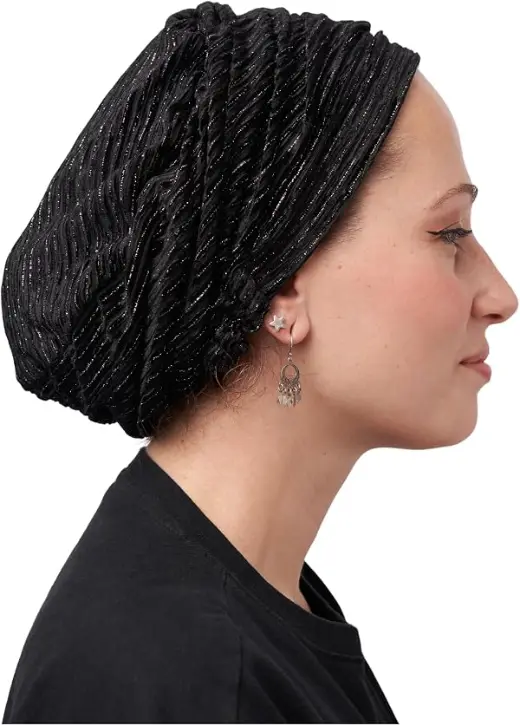
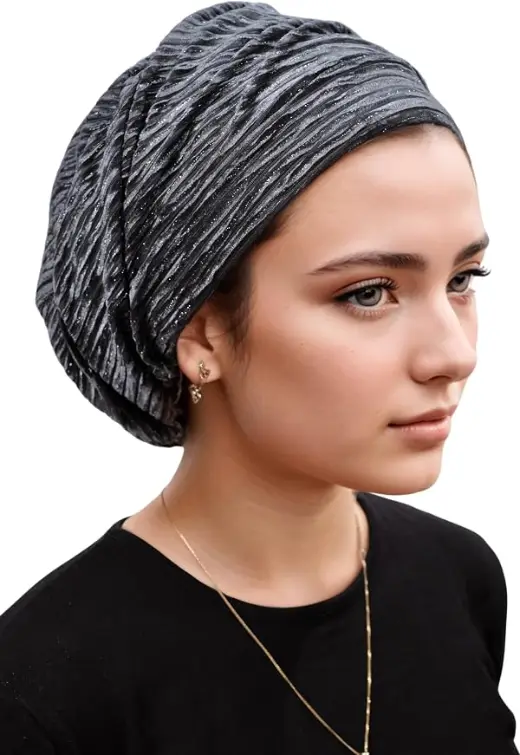
- One dressy piece for Shabbat, sheva brachot and simchas. Velvet is the classic: it looks finished and it grips the hair through a long meal.
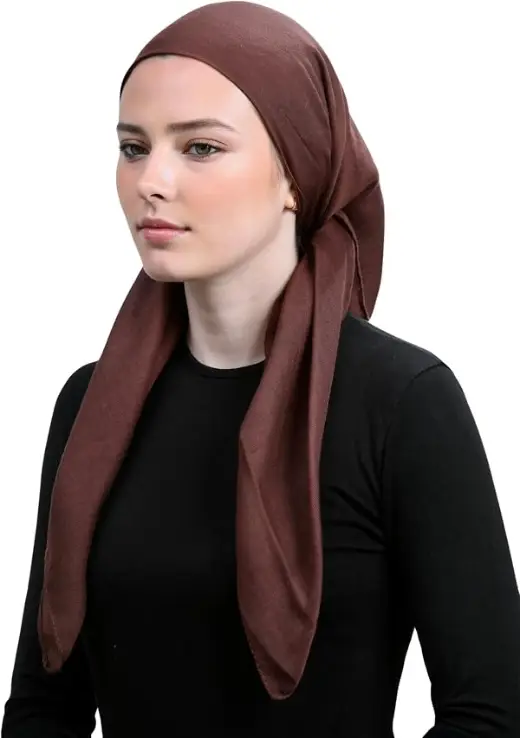
- One square scarf to layer over a plain snood when you want colour, or to tie on its own when you feel like practising.
That is five. You will know within a month what you reach for first, and you can fill in from there.
Choose the easy kind first
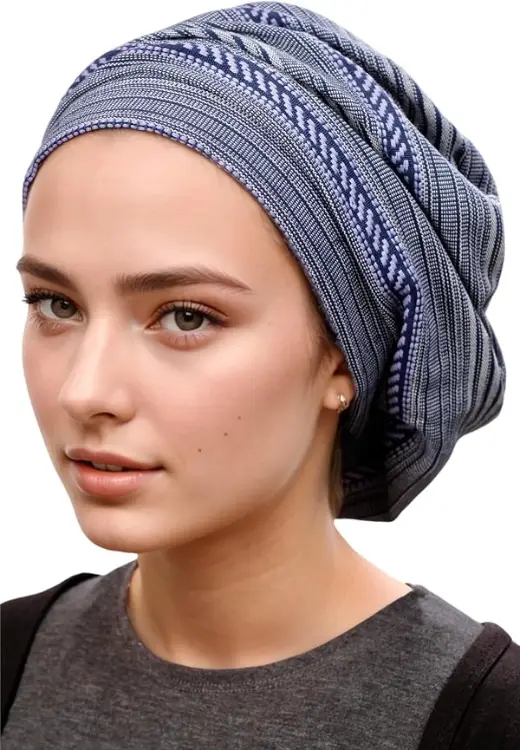
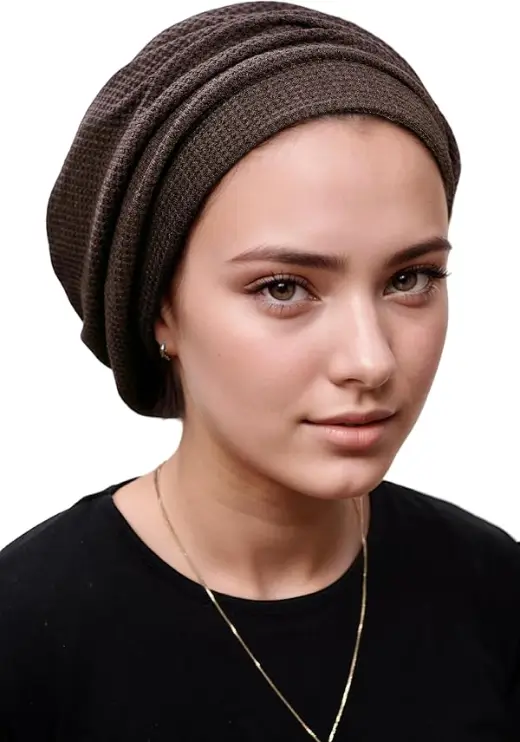
A tied tichel is beautiful, and many women love the ritual of choosing and tying a scarf each morning. It also takes practice, and in the first weeks of marriage you will have enough new things to learn. Start with coverings that go on in a few seconds: a slouchy beret, a snood, or a pre-shaped tichel where the cap is already sewn and you only tie one knot at the back. Learn to tie a square later, when you want to, not because you have to.
What matters most in a pull-on covering is how the opening is held. A plain elastic sewn in at a fixed length is either a little loose, so it drifts back, or a little tight, so it gives you a headache by the afternoon. Look for a band you can adjust. Ours is a flat elastic with a row of buttonholes and a hidden button: you set it to your head once and leave it.
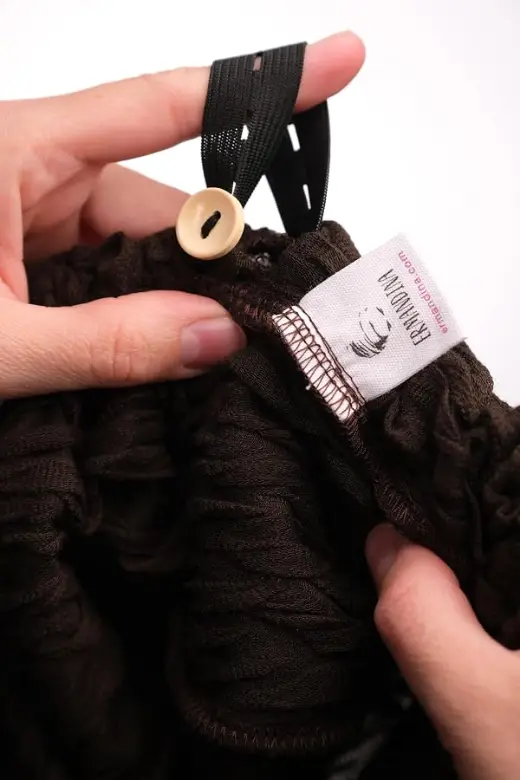
“Before I discovered this, I wore cheap coverings that required me to pin the covering to my hair in multiple places. This covering has a hidden adjustable elastic strip that tightens or loosens it, so that it fits perfectly, and there is no need for hair pins.”
Do a dress rehearsal before the wedding
This is the most useful thing you can do, and the easiest to skip in the rush before a wedding. A week or two before the wedding, take everything out of the packaging and:
- Set the band on each piece. Turn it inside out at the back, find the button, and move it until the covering sits firmly at the hairline without pressing. Do this for every piece; fabrics stretch differently.
- Try each one with your planned hairstyle. A low bun or a loose twist at the nape fills the back of a slouchy covering and gives the band something to sit above. A high bun lifts it from inside.
- Wear one for an hour around the house. Bend down, turn your head, go outside if it is windy. If it moves, go one buttonhole tighter. If you feel it when you raise your eyebrows, one looser.
Then you wake up on the first morning with coverings that already fit, and the only decision is which colour.
If you have a lot of hair, it will fit. A covering with a full, slouchy crown holds waist-length hair in a low bun without a lump at the back. Whether to cut your hair after the wedding is your decision and your community's; a well-cut covering works either way.
“I'm Orthodox and cover my hair. No way I can pile my waist length hair under a wig cap and wear a sheitel. I have one of these in every color!”
A few things women wish they had known
- Keep one in your bag. A soft snood folds small. Sooner or later you will want to change, or a covering will get rained on.
- Neutral first, colour later. The colours you love in the shop are not always the ones you wear at 7am. Start neutral; add colour once you know your routine.
- Cotton at home. Hours of cooking, cleaning or holding a baby are easier in a light, breathable cotton than in anything dressy.
- Wash gently. Hand wash or a delicate cycle at 30°C, dry flat. A hot dryer is what ruins the elastic in a band.
- It gets easier quickly. Once the fit is right, a covering becomes part of getting dressed, and within a few weeks you stop thinking about it.

If you are buying for a kallah
Head coverings are a lovely gift for a bride: practical, personal, and something she will wear from the first week. The usual worry is size, because you cannot exactly ask her to measure her head. With an adjustable band that problem goes away: the same covering buttons down for a small head and opens up to 24½ inches, so it will fit her whatever her size.
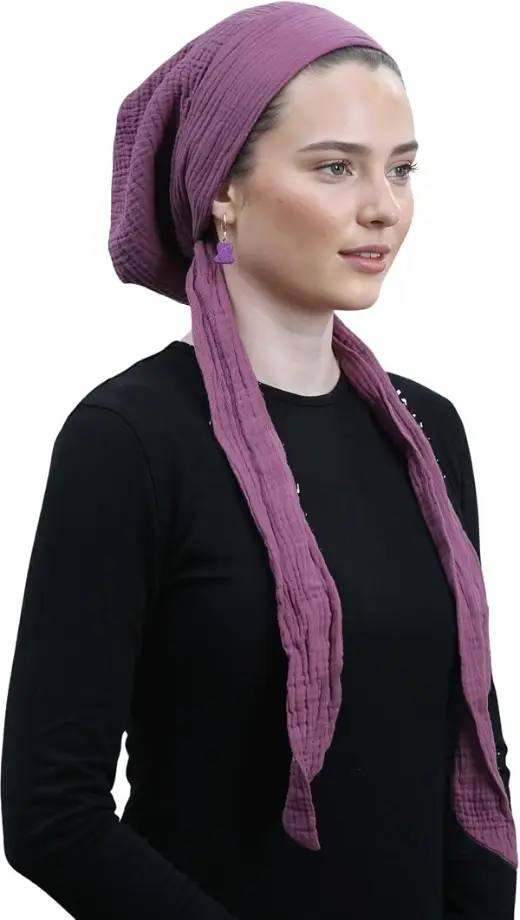
A few pointers. Choose a colour close to what she already wears, or a neutral. One everyday piece and one dressy piece make a good pair. If you know she likes the scarf look, a pre-shaped tichel with ties is a kind first step. And if you are a mother or a close friend, the most useful gift of all may be sitting down with her before the wedding and doing the dress rehearsal together.
“So far, I have purchased three. One as a gift for my granddaughter.”
More on what each type of covering is in our guide to tichels, snoods and berets, and on fit for a lot of hair in head coverings for a large head or a lot of hair. Mazel tov.
Questions, answered
How many head coverings does a new kallah need?
Fewer than most people think. Four or five pieces cover the first months: two everyday coverings in colours that go with most of your clothes, one light cotton for hot days and around the house, one dressy piece for Shabbat and sheva brachot, and a square scarf to layer when you want colour. You will learn what you actually reach for, and buy the rest later.
What is the easiest head covering for someone who has never covered her hair?
A slouchy beret or a snood with an adjustable band. There is nothing to tie and nothing to pin: you set the band to your head once, and after that it goes on like a hat. A pre-shaped tichel with sewn-on ties is a good second piece if you like the scarf look.
Can I give a kallah a head covering if I don't know her head size?
Yes, if it has an adjustable band. Ermandina berets and snoods are one size with a hidden elastic band and buttonholes, so they fit small heads and heads up to 24½ inches. Choose a neutral colour or something close to what she already wears.
Should I try my head coverings before the wedding?
Yes. Set the band to your head, try each piece with the hairstyle you plan to wear under it, and walk around the house for an hour. It is much easier to sort out fit at home than on the first morning after the wedding.
Does my hair have to be short to fit under a snood or beret?
No. A covering with a full, slouchy crown holds long and thick hair, even waist-length, in a low bun or twist. Whether to cut your hair is a personal and community decision; a well-cut covering works either way.
From the collection
One size. Every head.
Every Ermandina head covering has a hidden elastic band with a concealed button: it fits small heads and heads up to 24½ inches, and holds all your hair without pins. Handmade, shipped by Amazon.
See the collection