Tichel, Snood, Beret or Mitpachat? Jewish Head Coverings Explained
A plain-English guide to the names you will hear: tichel, mitpachat, snood, beret, pre-tied, wrap. What each one is, how it goes on, and which suits a first-timer, a long day, or a Shabbat table.

If you are new to covering your hair, or buying a gift for someone who does, the vocabulary can be confusing. Half the words are Yiddish, a few are Hebrew, some are plain English, and shops use them loosely. This guide sorts out what each one is, how it goes on your head, and what it is good for. Ours are made by hand, so where it helps we explain how each one is put together.
The short version
| Name | What it is | How it goes on | Good for |
|---|---|---|---|
| Tichel / mitpachat | A scarf: square or oblong fabric | You tie it yourself | Variety, layering, a soft draped look |
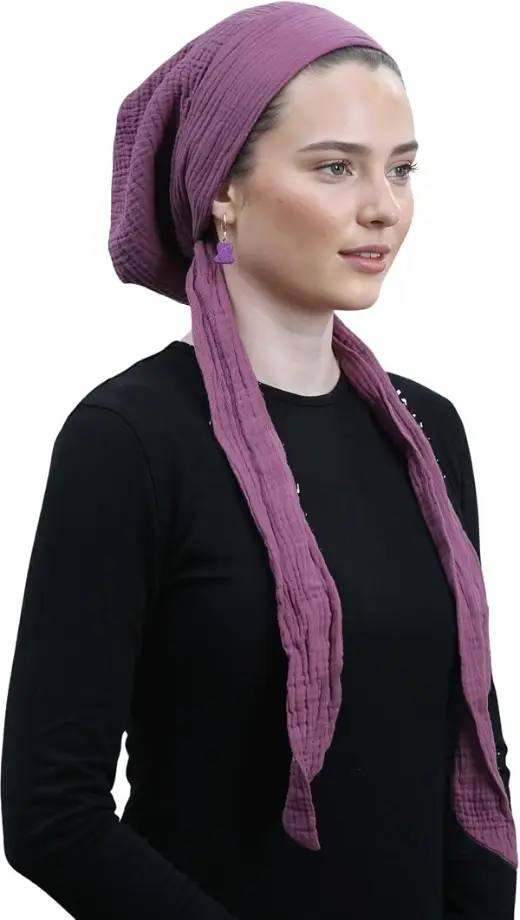
| Pre-shaped tichel (with ties) | A sewn cap with two long tails | Put on, tie once at the back | The scarf look without the learning curve |
| Snood | A sewn, bag-shaped covering with an elastic opening | Pull on, tuck hair in | Everyday wear, lots of hair, no fuss |
| Beret | A soft round hat, cut full so it covers the hair | Pull on | Everyday wear, a neat finished look |
| Turban / wrap | A pre-sewn covering shaped like a wrapped turban | Pull on | The wrapped look in ten seconds |
| Pre-tied | Any of the above where the knot or wrap is sewn in | Pull on | Speed |
Tichel and mitpachat: the scarf
Tichel is Yiddish for a small cloth or kerchief; mitpachat is the Hebrew word for the same thing. Both simply mean a scarf tied over the hair. The classic tichel is a square, folded into a triangle, placed on the head and tied at the nape of the neck. Oblong scarves are wrapped and twisted into fuller styles. The appeal is variety: one square in a soft colour can be tied flat and plain on a weekday and twisted into a crown with a second scarf for Shabbat.
The catch is that a tied scarf needs practice and a little help. Smooth fabric slides on smooth hair, so most women wear a velvet-lined headband or a thin volumizer underneath. If you want the tied look but not the fuss, look at the pre-shaped version below.
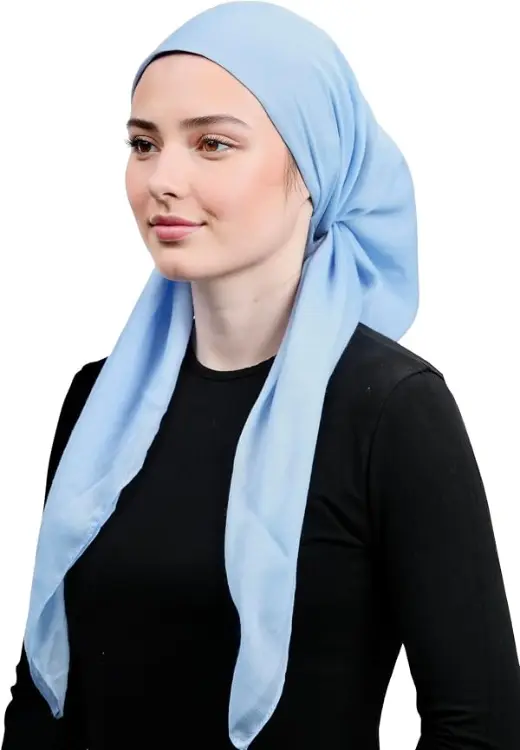
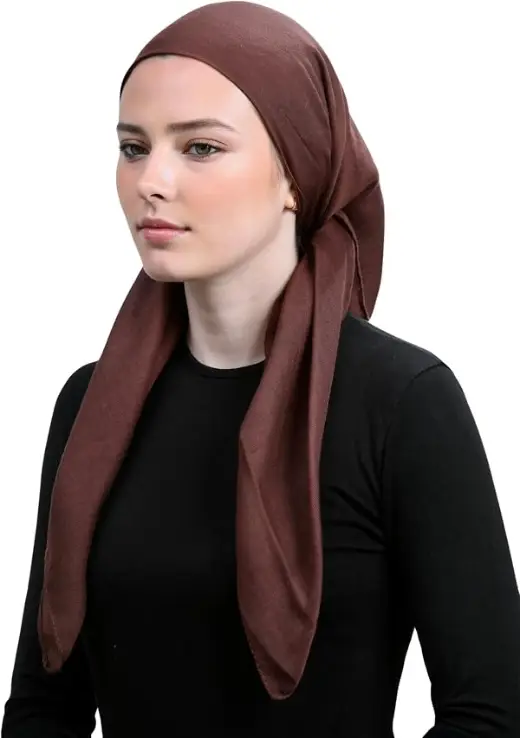
The pre-shaped tichel with ties
This is a tichel that has already been cut and sewn into a cap shape, with two long tails attached. You put the cap on, pull the tails back and tie one knot. No folding, no guessing where the point should sit, and because the cap is shaped it does not ride up the way a flat scarf can. Ours is made of two layers of pure cotton with a textured surface, which grips the hair better than a smooth single layer. For a woman who loves how a tichel looks but has never tied one, this is the easiest way in.
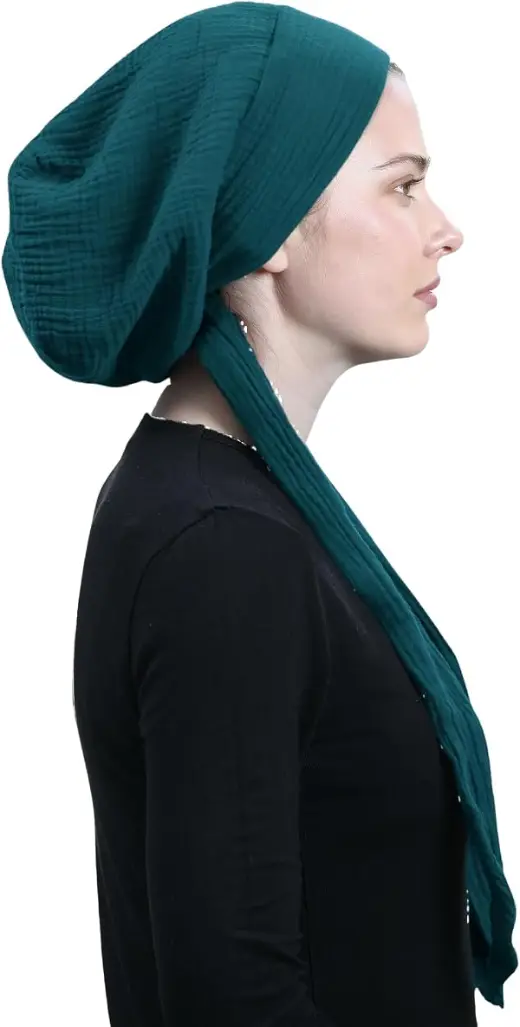
The snood
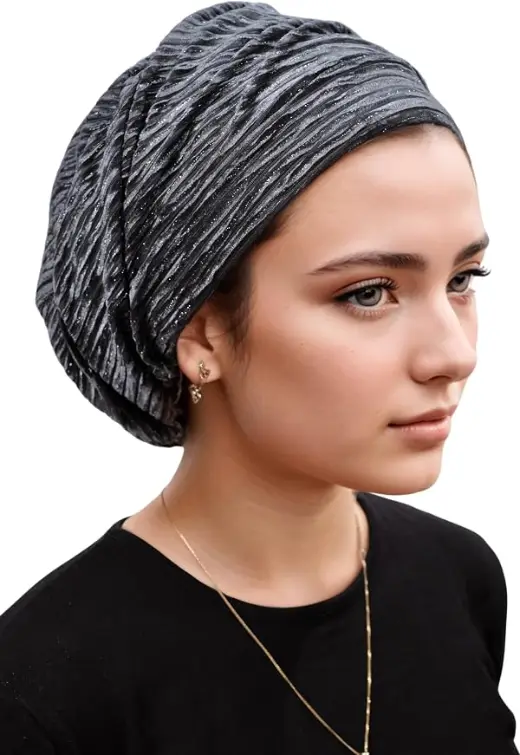
A snood is a sewn covering shaped like a soft, roomy bag. Its opening is finished with an elastic band or a drawstring, so you pull it on, tuck your hair in and you are done. Historically the word meant a hairnet; today it covers everything from a chunky knitted snood to a ribbed slouchy one that reads as a pleated turban from the front. What matters most is room: a good snood takes waist-length hair without a lump at the back.
The one thing to check is how the opening is held. A plain elastic is fixed at one size, which means it either squeezes or slips. Ermandina snoods have an elastic band with buttonholes and a concealed button, so you set the size once and it stays there. Our knitted snood uses an elastic drawstring instead, for the same reason.
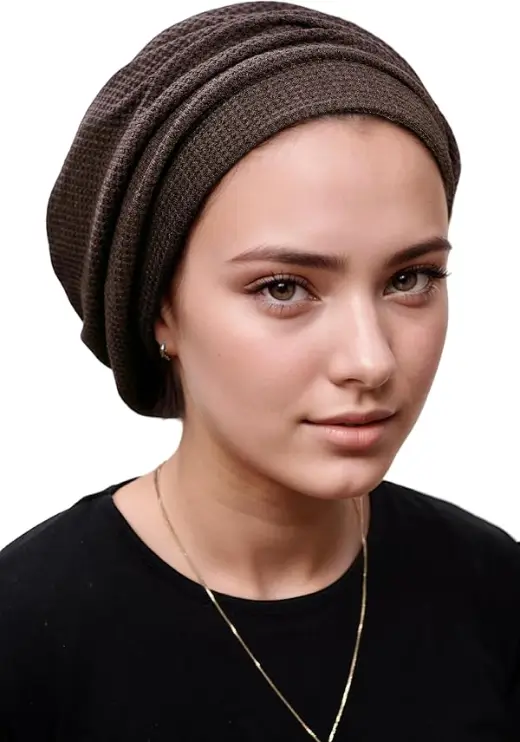
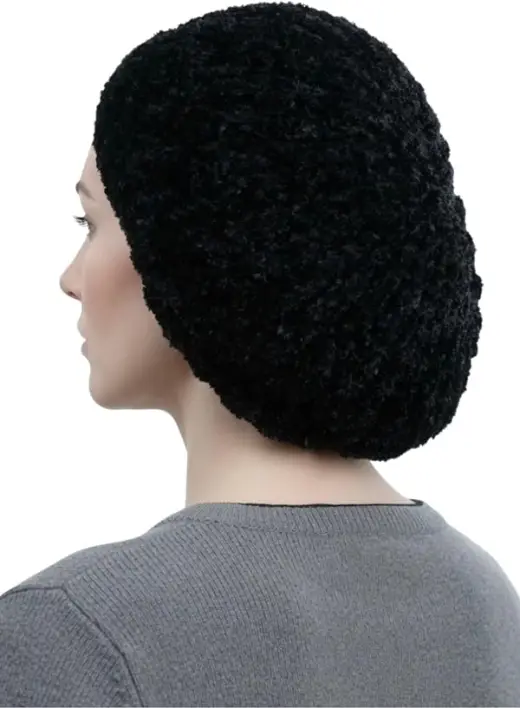
The beret
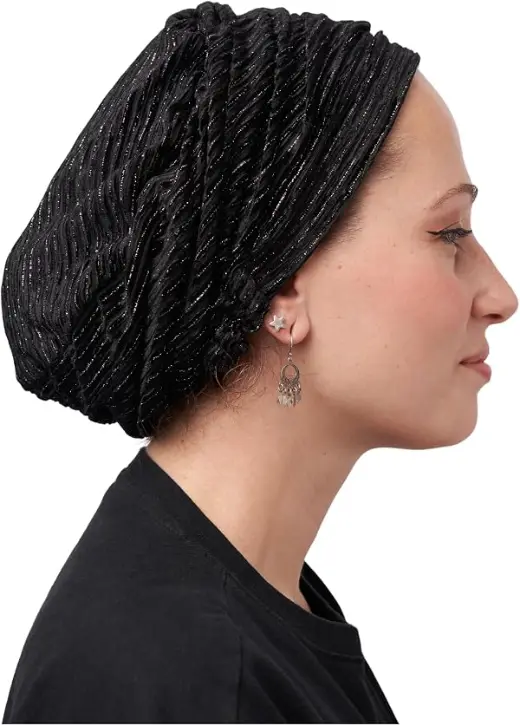
A beret is just a soft, round, brimless hat. Among Jewish women it is one of the most common everyday coverings, for the simple reason that it goes on in a second and looks finished. The difference between a fashion beret and a head-covering beret is volume: ours are cut full and slouchy so that all the hair fits inside with a clean line, and the slouch can be worn back, to the side or forward. Fabric does most of the talking here, from a crinkle cotton for summer to a velvety knit with a little shimmer for Shabbat and simchas.
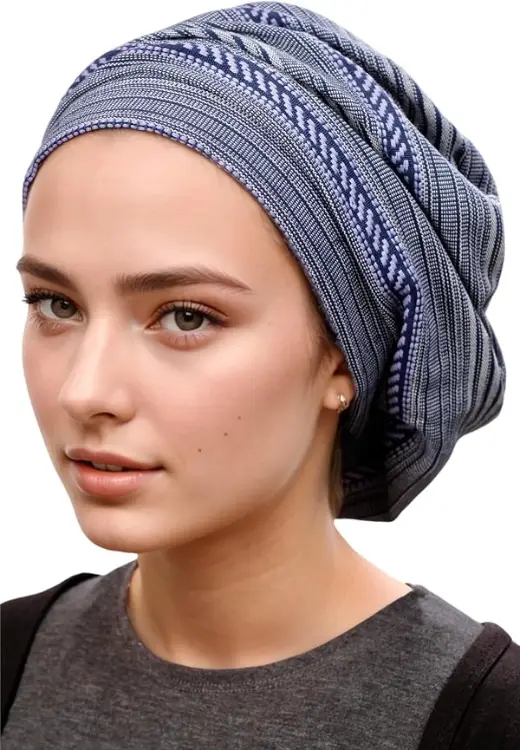
Turbans, wraps and anything “pre-tied”
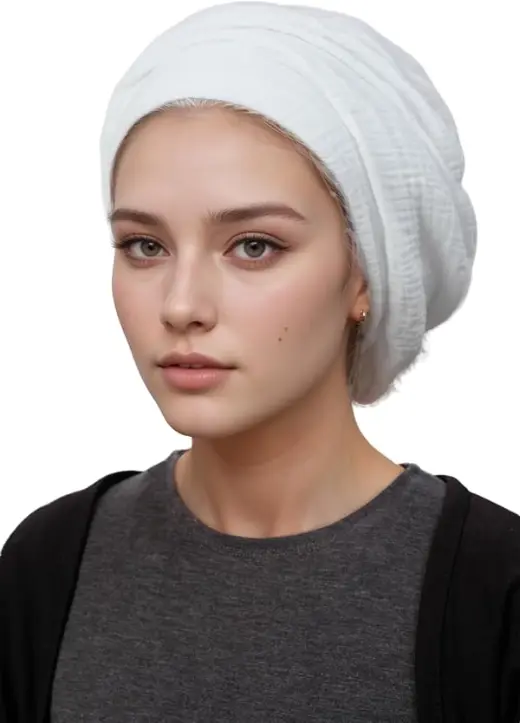
A pre-tied covering is one where the knot, twist or wrap has been sewn in by the maker. A pre-tied turban gives you the deep, layered look of a long scarf wrapped several times, with none of the wrapping. Our crinkle-cotton wrap is built this way: the folds are in the garment, the elastic band holds it, and it goes on like a hat. Pre-tied styles are what we suggest when someone wants the look of a wrap and has ten seconds in the morning.
So which one should you choose?
- You have never covered before: a slouchy beret or a snood with an adjustable band. Nothing to learn.
- You love the scarf look: start with a pre-shaped tichel with ties, then try tying a square when you feel like it.
- You have a lot of hair: a snood or a full beret. Read our guide to fit for large heads and thick hair.
- Hot climate: crinkle cotton or a double-layer cotton tichel. See fabrics by season.
- Shabbat and simchas: velvet, or a square scarf layered over a plain snood.
- It keeps slipping: the problem is almost always the band, not you. See how to keep a beret or snood from slipping.
Women cover their hair for many reasons: religious observance, modesty, hair loss, or simply because they like how it looks. Everything above applies equally. If you are covering during hair loss, look for soft, smooth fabrics such as crinkle cotton, and an adjustable band rather than a fixed elastic, which can press on a bare scalp.
Questions, answered
What is the difference between a tichel and a snood?
A tichel is a scarf that you tie on your head yourself, usually a square or oblong piece of fabric. A snood is a sewn, bag-shaped covering with an elastic or drawstring opening that you simply pull on. A tichel takes a minute and some practice; a snood takes a few seconds and no skill at all.
What does mitpachat mean?
Mitpachat (מטפחת) is the Hebrew word for a kerchief or head scarf. In everyday use it means the same thing as the Yiddish word tichel: a scarf tied over the hair.
Is a beret a Jewish head covering?
A beret is simply a soft round hat, and many Jewish women wear one as their everyday covering because it is quick, comfortable and covers all the hair when it has enough volume. Ermandina berets are cut full and slouchy for exactly that reason, with a hidden elastic band so they stay put.
Which head covering is easiest for a beginner?
A snood or a slouchy beret with an elastic band: there is nothing to tie and nothing to pin. Pre-shaped tichels with sewn-on ties are the next step, because the shape is already made and you only tie a knot at the back.
Do I need pins or a volumizer under a head covering?
With a tied square scarf, many women use a velvet headband or a small volumizer to stop slipping and add shape. With an elastic-band beret or snood you do not need either: the band holds it in place and the slouchy cut gives the volume.
From the collection
One size. Every head.
Every Ermandina head covering has a hidden elastic band with a concealed button: it fits small heads and heads up to 24½ inches, and holds all your hair without pins. Handmade, shipped by Amazon.
See the collection