How to Keep a Beret or Snood From Slipping, With No Pins
A head covering that creeps back all day is usually a problem with the elastic, not with you. Why coverings slip, how to set an adjustable band in ten seconds, and the small habits that keep one in place through wind, errands and a long day out.

Every woman who covers her hair knows the gesture: a hand going up to the back of the head to pull the covering forward again. By mid-morning it has crept back an inch. By lunch there are pins in it. By evening there is a headache from the pins. A covering slips for a handful of mechanical reasons, and each one has a fix.
Why coverings slip
The elastic is the wrong length
Most berets and snoods are finished with a plain elastic sewn in at a fixed length. If it is a little loose for your head, nothing holds the covering at the hairline and it drifts back. If it is a little tight, it is stretched hard all day, and stretched elastic creeps upward toward the narrowest part of the head, taking the covering with it. Either way the opening needs to match your head rather than an average one.
Smooth on smooth
A slippery synthetic lining on freshly washed, conditioned hair has nothing to hold on to. Textured fabrics, ribbed knits and crinkle cotton grip much better, and a low bun gives the covering something to sit behind.
Not enough room at the back
If the crown is shallow and your hair is long, the hair pushes the covering up from inside. It is not slipping so much as being lifted. That one is covered in our guide on fit for large heads and thick hair.
The ten-second fix: set the band once
Every Ermandina beret and snood has a flat elastic band running around the opening, with a row of buttonholes and a concealed button. Setting it is the whole job.
- Find the button. Turn the covering inside out at the back. You will see the elastic band and, near one end, a small button.
- Choose a buttonhole. Move the button to a closer hole to make the opening smaller, or a further hole to make it larger. Start one hole tighter than it was.
- Put it on and tuck. Wear your hair the way you normally will, put the covering on, tuck the hair in, and move your head around. It should sit firmly at the hairline without pressing.
- Adjust once more if needed. Too tight: one hole out. Still drifting: one hole in. Then leave it. From now on it goes on and off like a hat.
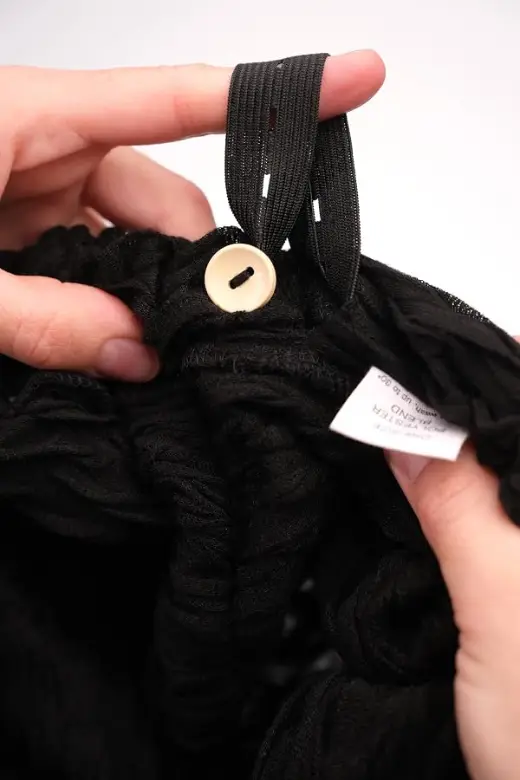

The right setting is firmer than you expect and looser than you fear. If you can feel the band when you raise your eyebrows, go one hole out. If you can slide a finger under the front edge without effort, go one hole in.
“Adjustment elastic buttonholes are closely spaced so fixing it to the perfect fit was easy. Stays on during chores and out in the windy autumn weather.”
Small habits that help
- Low bun or twist. Hair gathered at the nape fills the slouch of the covering and gives the band a shelf to sit above. A high bun lifts the covering from inside.
- Let the hairline dry. Damp, conditioned hair at the front is the slipperiest surface there is. Give it a few minutes before the covering goes on.
- Match the fabric to the day. A ribbed knit or crinkle cotton holds on a windy day better than a smooth satin-backed fabric. Velvet grips hair well, which is one reason a velvet beret is a good choice for a long Shabbat table.
- Dry it flat after washing. Elastic that goes through a hot tumble dryer loses its spring. A delicate cycle at 30°C and drying flat keeps the band working for years.
If you wear a tied tichel
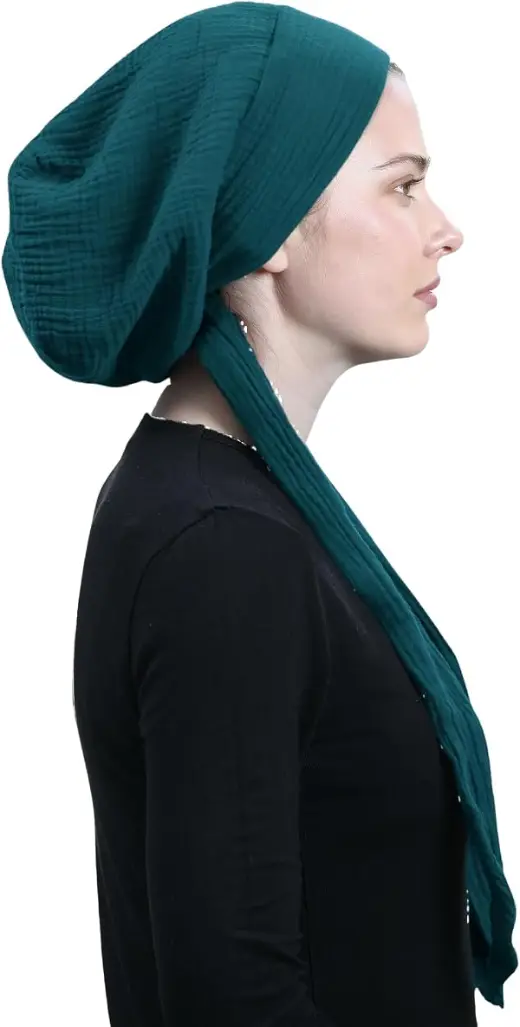
A tied scarf has no band at all, so the hair and the fabric do the holding. Three things make the biggest difference: tie over a low bun rather than loose hair; use a textured cotton rather than a slippery polyester; and if you still slide, wear a velvet-lined headband underneath. A pre-shaped tichel with sewn-on ties is the middle path. The cap is already shaped to the head and made of two layers of textured cotton, so it slips far less than a flat square, and the only thing you tie is one knot at the back.
When it is the covering, not you
If you have tried a low bun, dry hair and a textured fabric and the covering still creeps, stop troubleshooting yourself. A fixed elastic that does not match your head size cannot be trained. What works is a covering whose opening you can set: a button band, an elastic drawstring, or ties you knot yourself. One of our buyers put it better than we could:
“Before I discovered this, I wore cheap coverings that required me to pin the covering to my hair in multiple places. This covering has a hidden adjustable elastic strip that tightens or loosens it, so that it fits perfectly, and there is no need for hair pins.”
Questions, answered
Why does my beret keep sliding back?
Almost always because the elastic at the opening is fixed at one length and is either too loose for your head or stretched so far that it creeps. Smooth fabric on smooth hair makes it worse. An adjustable band set to your size solves the first; a textured fabric helps with the second.
Do I need bobby pins or a hat clip to hold a head covering?
Not with an adjustable elastic band. Once the band is set to your head size the covering holds through wind and a full day without pins. Pins are a workaround for coverings whose opening cannot be adjusted.
How do I adjust the elastic band in an Ermandina beret or snood?
Turn the covering inside out at the back and find the concealed button on the elastic band. Move it to a closer buttonhole to make the opening smaller, or a further one to make it larger. Try it on and repeat until it holds without pressing. It takes about ten seconds and you only do it once.
Should a head covering feel tight to stay on?
No. Tight means the elastic is doing all the work, which gives you a headache and makes the band creep. A covering that fits sits firmly at the hairline without leaving a mark.
What helps a tied tichel stay on?
Tie it over a low bun or twist rather than loose hair, choose a textured cotton over a slippery synthetic, and if you still slide, wear a velvet-lined headband underneath. A pre-shaped tichel with sewn-on ties slips far less than a flat square, because the cap is already shaped to the head.
From the collection


One size. Every head.
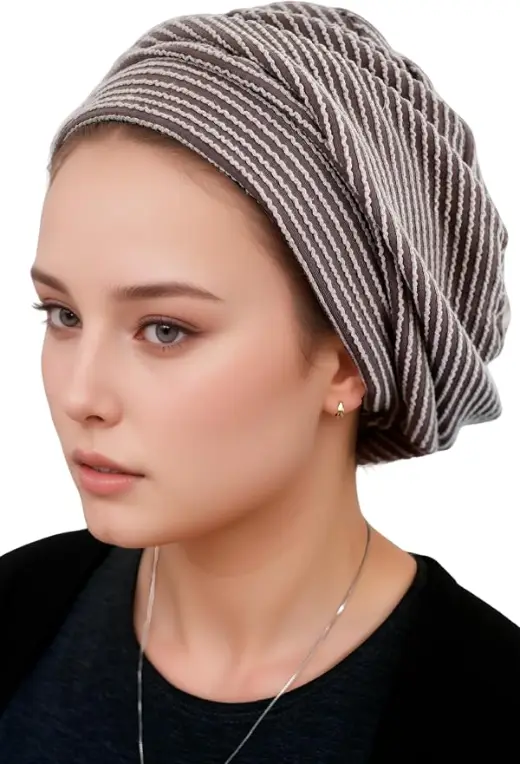
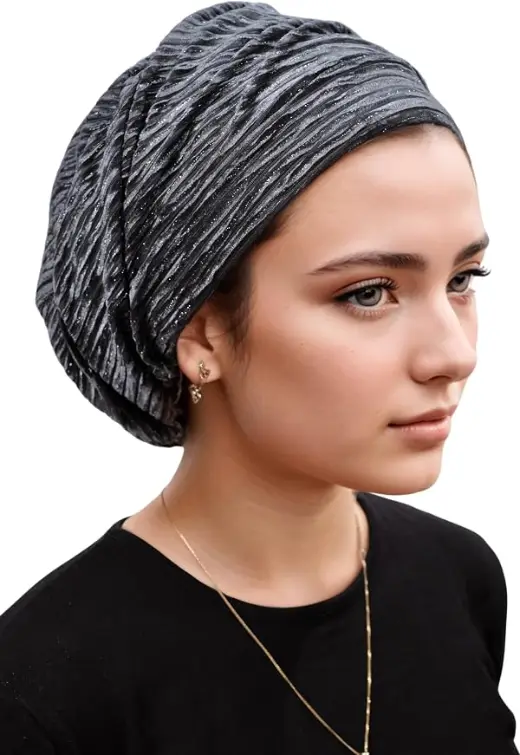
Every Ermandina head covering has a hidden elastic band with a concealed button: it fits small heads and heads up to 24½ inches, and holds all your hair without pins. Handmade, shipped by Amazon.
See the collection