Cotton, Viscose, Velvet or Knit? Choosing a Head Covering by Season
The fabric decides whether a covering feels cool in July, warm in January, or scratchy on a sensitive scalp. What each fabric does on the head, which suits which season, and how to wash each one so it lasts.
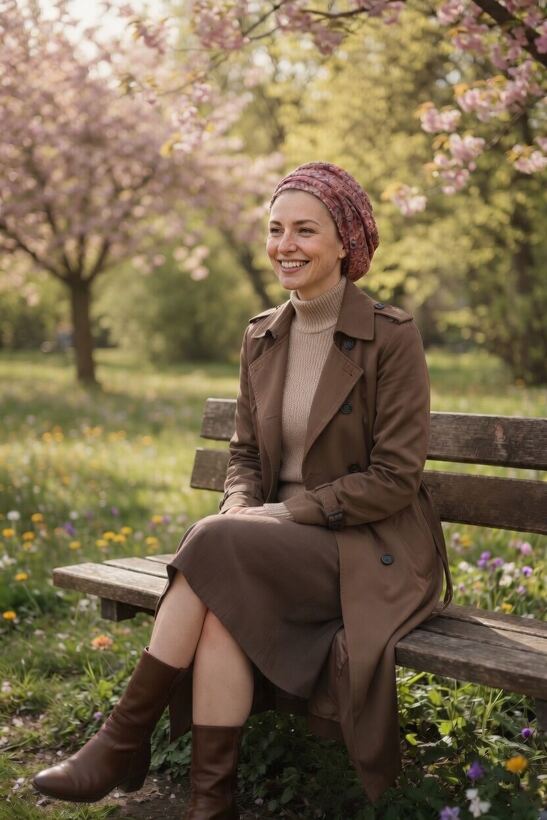
Two coverings can be the same shape, the same colour and the same price and feel completely different on the head, because the fabric does most of the work. It decides whether you are cool or sweating, whether the covering grips or slides, whether it reads as weekday or wedding, and how it comes out of the wash. We make coverings in all of these, so here is what each one does, season by season.
The fabrics at a glance
| Fabric | Feels | Best season | Best for |
|---|---|---|---|
| Crinkle cotton | Cool, soft, textured | Summer, warm climates | Hot days, sensitive scalp, wet hair after a shower |
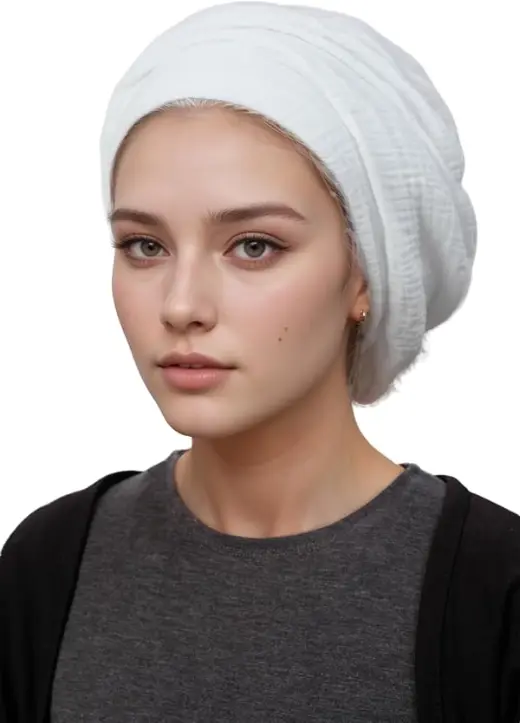
| Double-layer cotton | Smooth, breathable, a little structure | Spring to autumn | Tie-back tichels, everyday |
| Cotton-viscose | Light, fluid, drapes well | Spring, summer | Square scarves, layering over a snood |
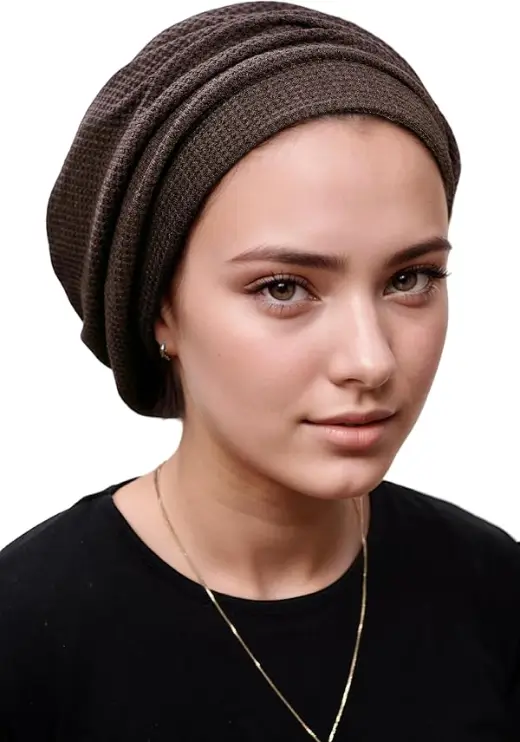
| Light waffle or stretch knit | Soft, airy, grips the hair | All year, including hot summers | Everyday wear, windy days, a pleated look |
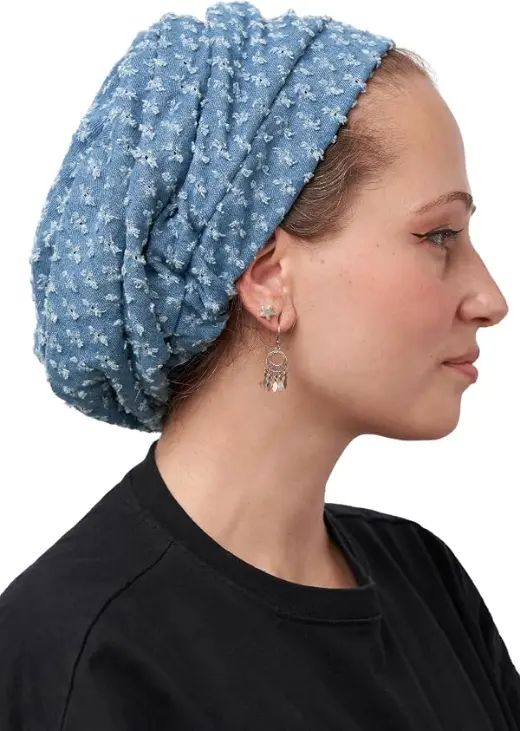
| Denim-look cotton blend | Relaxed, matte, medium weight | All year except the hottest weeks | Weekday wear, goes with everything |
| Printed polyester | Light, easy-care, holds colour | Autumn to spring | Prints and florals, travel |
| Chunky knit, mesh-lined | Warm, airy inside | Winter | Cold weather without yarn on the hair |
| Velvet | Plush, dressy, warm | Autumn, winter, evenings | Shabbat, simchas, holidays |
Summer: cotton, and a light knit
Heat is where fabric stops being a preference and becomes comfort. Cotton absorbs moisture and lets it evaporate; most synthetics do neither, which is why a lined polyester snood feels like a winter hat in August. Our pick for hot weather is crinkle cotton: the crinkle keeps most of the fabric slightly off the scalp so air moves underneath, and it has enough grip to hold wet hair straight after a shower. A double-layer cotton tichel with ties is the other summer workhorse. Two layers sounds warmer than one, but a light cotton doubled is still cooler than a single layer of lined synthetic, and the second layer stops the covering going see-through in strong sun.
The surprise in our reviews is the waffle-knit ribbed snood. It looks like a winter piece, but the knit is light and open, and buyers in hot climates wear it right through the summer:
“Waffle-knit fabric has a nice feel. Comfortable even on 100-degree summer days.”
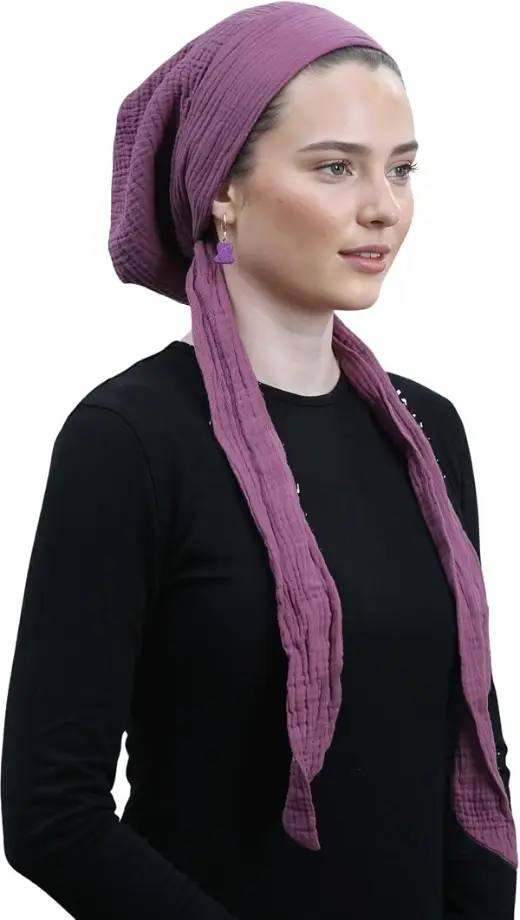
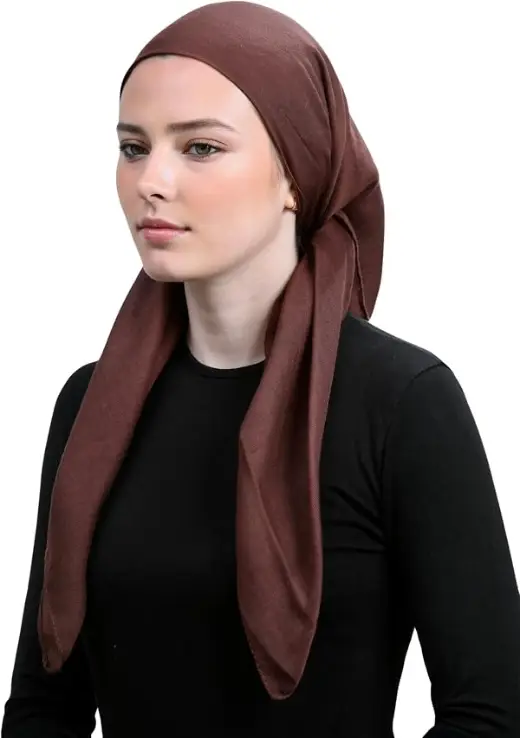
For a scarf to tie or to layer, cotton-viscose is the fabric. Viscose is made from plant cellulose, drapes like silk and breathes almost like cotton. Our 90 × 90 cm square is a cotton-viscose blend for exactly that reason: it ties flat without bulk and does not cling in humidity.
Spring and autumn: the in-between fabrics
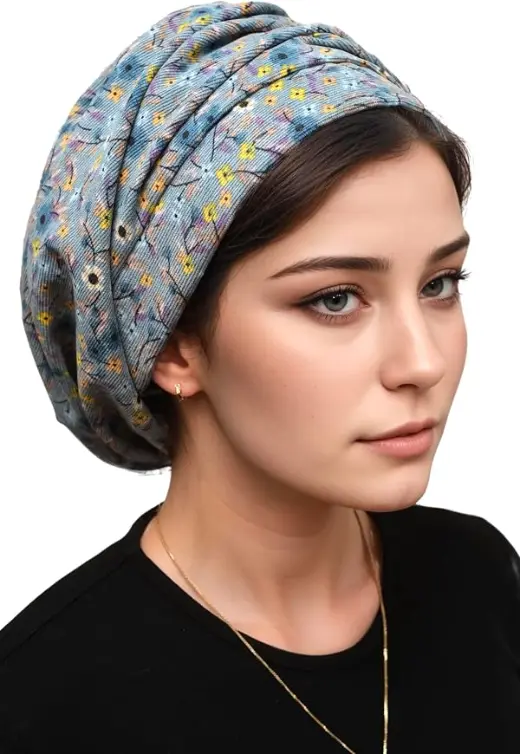
This is where most everyday coverings live. A denim-look cotton blend (ours is 80% cotton) has the matte, relaxed look of a favourite pair of jeans, enough weight to hold a slouch, and goes with practically any outfit. Printed polyesters come into their own here too: they are light, keep their colour wash after wash, and carry a floral or a stripe better than cotton does. Not for a heatwave, but from early autumn to late spring a medium-weight print is lovely. A striped stretch knit sits in the same group and, like the waffle knit, turns out to be cooler than it looks; one buyer wears hers in a 100-degree climate.
Winter: a real knit, and velvet
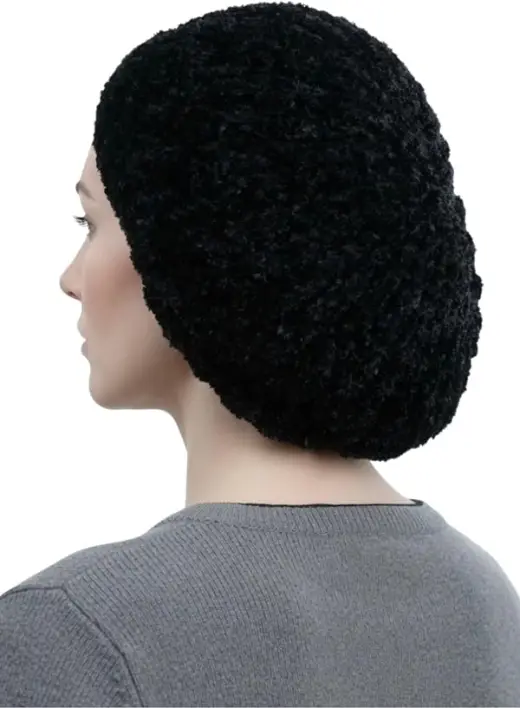
Thick knits trap air, and trapped air is warmth. For real cold, a chunky knitted snood lined with fine mesh keeps the warmth of the yarn while the mesh sits between the knit and your hair, so nothing scratches and nothing snags. Ours is held by an elastic drawstring rather than a button band and comes in two sizes.
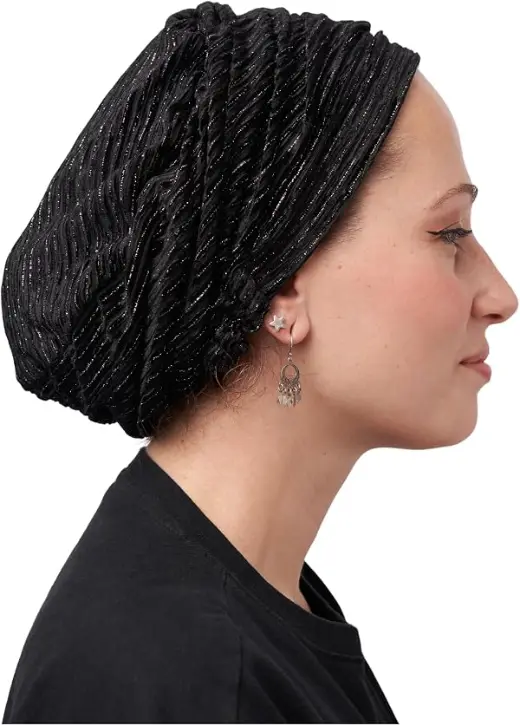
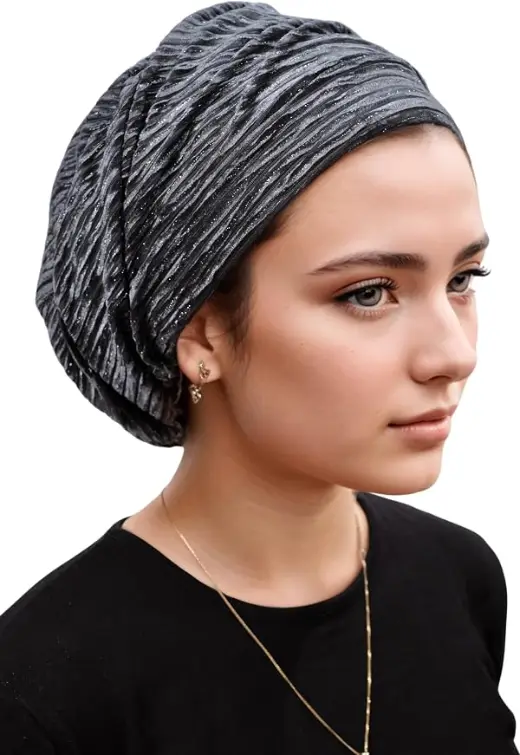
Velvet is the dressy end of winter. The dense pile holds warmth, catches light, and grips hair better than almost any smooth fabric, which is why a velvet beret stays put through a long Shabbat meal. Ours has a quiet silver shimmer woven in. Lovely from autumn to spring and for any evening; not a July fabric.
If your scalp is sensitive
Whether from skin that reacts easily or from hair loss, a sensitive scalp changes the priorities: softness and breathability first, structure second. Unlined cotton is the safest choice, and crinkle cotton in particular is soft without being slick. Just as important is what holds the covering on. A fixed elastic presses on the same line all day; an adjustable band set one hole looser does not. If you want a knit in winter, choose one with a lining between the yarn and the skin.
A quick test at home: rub the inside of the covering against the inside of your wrist for ten seconds. If it feels fine there, it will feel fine on your head.
Washing, by fabric
- Cotton, cotton blends, printed polyester, knits, velvet: hand wash or a delicate cycle at 30°C (86°F). Dry flat, away from a radiator. This protects the elastic band more than anything else; a hot tumble dryer is what kills the spring in an elastic.
- Velvet: never wring it. Press the water out in a towel and dry flat, pile up. Steam rather than iron.
- Mesh-lined knit: delicate cycle in a laundry bag, dry flat. Reshape the crown with your hands while damp.
- Cotton-viscose squares: machine washable. Iron on low while slightly damp if you like them crisp.
- All of them: cool water, mild detergent, and go easy on fabric softener, which can leave the inside of a covering slick against the hair.
A small year-round wardrobe
You do not need a drawer full. Four pieces cover a year: a crinkle-cotton wrap or cotton tichel for the heat, a waffle-knit or denim snood for the long in-between months, a chunky knitted snood for winter, and one velvet beret for Shabbat and simchas. Add a cotton-viscose square to layer over any of them when you want colour. One of our buyers did roughly this and wrote that she now owns seven, “in a variety of colors and fabrics”; most women find two or three is plenty.
Questions, answered
What is the coolest head covering fabric for summer?
Crinkle cotton and a light double-layer cotton. Cotton absorbs moisture and lets air through, and the crinkle texture keeps the fabric slightly off the scalp. Light waffle knits and cotton-viscose blends are also comfortable in heat. Avoid lined synthetics and velvet in real heat.
What is the warmest head covering for winter?
A chunky knitted snood or velvet. A thick knit traps a layer of air; velvet has a dense pile that holds warmth and looks dressy. A mesh-lined knitted snood gives warmth without the yarn touching the hair directly.
Which fabric is best for a sensitive scalp or during hair loss?
Soft, breathable, unlined cotton is the usual choice: crinkle cotton or a smooth double-layer cotton. Look for an adjustable band rather than a fixed elastic, so nothing presses on the scalp, and avoid rough knits worn directly on bare skin.
How do I wash a tichel, snood or beret?
Hand wash or use a delicate cycle at 30°C (86°F), then dry flat. Do not tumble dry hot, because heat weakens the elastic band and can shrink cotton. The square cotton-viscose scarves are machine washable.
Does velvet work in summer?
Not well. Velvet holds warmth, which is lovely from autumn to spring and for an evening event, but on a hot day it feels heavy. Keep velvet for Shabbat tables, simchas and cooler months, and wear cotton or a light knit in the heat.
From the collection
One size. Every head.
Every Ermandina head covering has a hidden elastic band with a concealed button: it fits small heads and heads up to 24½ inches, and holds all your hair without pins. Handmade, shipped by Amazon.
See the collection